The buyer said its supplier asked for more to keep delivering. Five weeks later, the supplier had a new owner, and the buyer was helping to pay for it
In 2018, an engine maker in Cologne had a problem with one of its suppliers. The engine maker is Deutz. It builds engines that go into machines such as tractors and construction equipment.
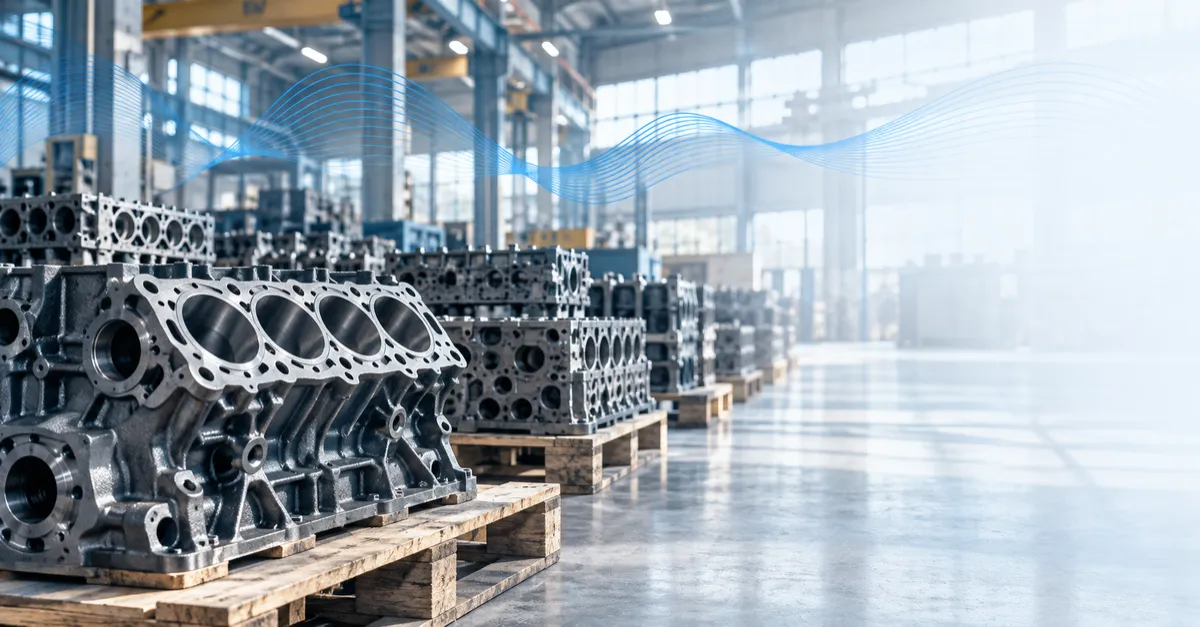
Two of the central parts of such an engine are the crankcase, the metal block that holds the engine together, and the cylinder head, which closes it on top. Both are cast, molten iron poured into a mould.
Deutz bought them from a foundry called Neue Halberg Guss, NHG, with plants in Saarbrücken and Leipzig.
A part like this is made to one engine maker's own drawings. I assume that moving it to another foundry takes time. So for a while, the buyer depends on this one supplier.
At the start of 2018, NHG came under a new owner, the Prevent group. A plan to close the Leipzig plant followed, and then a strike of about six weeks.
Deutz is listed on the stock exchange. A listed company has to tell its investors, in writing, about anything that can move its numbers. So the buyer's side of this story is on the public record, in Deutz's own words.
In its half-year report, Deutz wrote that the risk in its purchasing had greatly increased because of the strike at NHG. It moved its own rating of that risk from low to medium. It said it was in talks with NHG and with its own customers.
On 27 July it raised its forecast for the year anyway. That means it told investors it expected a better year than it had announced before.
In the same notice it wrote down what that forecast depended on: no further disruption from the strike, and a definitive end to the strike through the arbitration then running, a process in which a neutral party helps both sides of a labour dispute reach an agreement.
In October, by Deutz's account, NHG named three conditions for continuing to supply.
Significant price increases.
One-off payments worth millions of euros.
Firm commitments to buy fixed volumes.
Deutz said the existing contract was still in force. In other words, in Deutz's view, the terms of supply had already been agreed.
Deutz went to court.
The regional court in Saarbrücken, the Landgericht, ordered NHG to resume supplying crankcases and cylinder heads immediately, initially until the end of the year.
An order like this is fast and temporary. It keeps the parts moving while the dispute itself is still open. Deutz announced the order in late October. An order that runs to the end of the year buys weeks.
On 29 November, NHG's operations were sold to new owners.
The same day, Deutz announced that it supported the change of ownership and was partly financing the new owners. The amount was not published.
What I notice is where the answer went.
The demand was about price, payments and volume.
In Deutz's own account, the answer went first to a court, and then to the question of who owned the supplier.
And the record of it starts long before October. The risk rating moved in the summer. The assumption about the supplier was written into a public sentence in July.
By the time the demand came, the buyer had already said, in writing, what it was counting on.
Those documents can be read by anyone, the supplier included.
What could the supplier read in that record?
Be well, Tina
Eleven patterns from conversations I had this year, about what actually decides a negotiation. One edition every Tuesday, then it ends.
