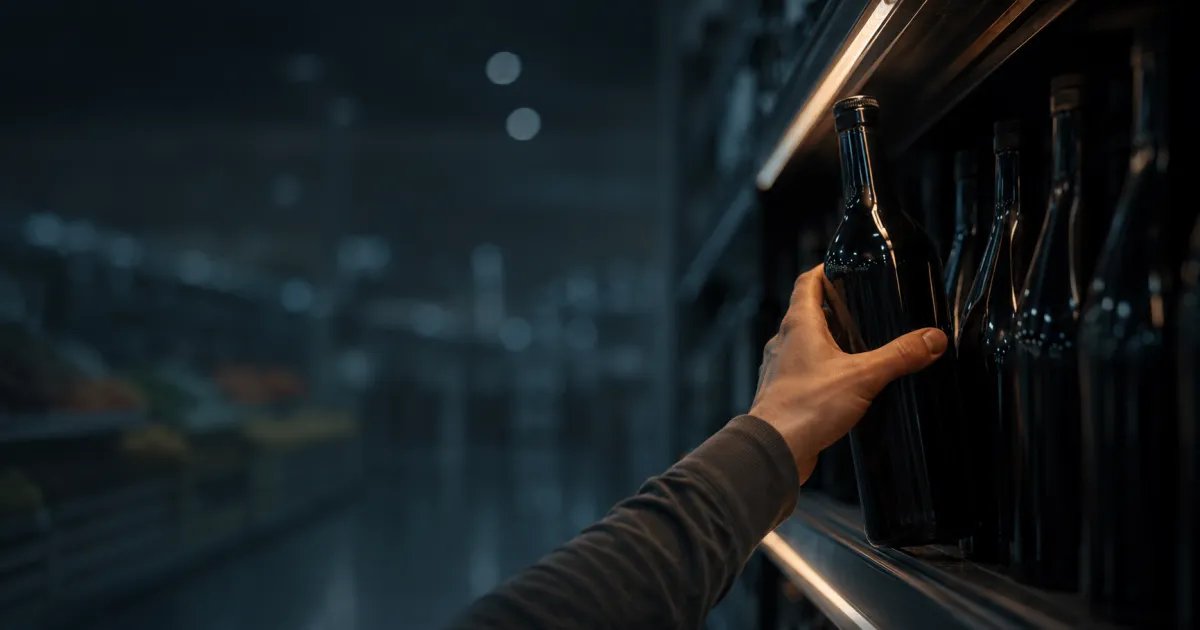
Carrefour put a sign where the Pepsi used to be. The sign was the negotiation.
In January 2024, a shopper in France reached for a bottle of Pepsi and found a small printed sign instead.
"We no longer sell this brand due to unacceptable price increases."
The products were gone. Pepsi, Lay's, Doritos, Lipton, Quaker, 7Up. Across France, Belgium, Italy and Spain. More than nine thousand stores, close to two thirds of Carrefour's store presence worldwide.

The dispute itself was ordinary. PepsiCo had signalled another round of price increases for 2024, after two hard years of them. Carrefour said the increases were too much and stopped stocking the brand.
Let's look into the sign.
Maybe it was not written for PepsiCo.
We were not in those rooms, and what follows is a read of the public facts. Other reads are possible.
The signal
The signal here is not a pause or a glance across a table. It is a choice of words, placed in public.
One word carries most of it. Inacceptable. Unacceptable.
A moral word where a commercial one was expected, set at eye level, signed by the retailer, standing in front of the customer.
Carrefour had made this move before. In 2023, against shrinkflation, it labelled shelves with the supplier named and the shrinking product described. PepsiCo was among the names then too. So January was a practised play, not a flash of temper.
The awareness
We notice the signal. One reading is that the sign was aimed past PepsiCo. At the shopper, and through the shopper, back at the supplier. Positioning done in the open, before the next private number is spoken.
PepsiCo read it differently. Its answer was that there had been no agreement on a new contract, so it had stopped supplying at the end of the year, something Carrefour knew could happen. One side says we removed you. The other says we left. The same empty shelf, two hands reaching for the pen.
Both can be partly true. That is what makes it a signal and not a fact.
And underneath the words sat something about power. Carrefour could pull the brand because it is large, and probably most shoppers stayed. A smaller retailer doing the same might lose the traffic it depends on.
The power came from size and from alternatives. And from using them. Size and alternatives were the option. The sign is what turned the option into power.
There is one more layer, and it is the one I would sit with longest. Carrefour, like most big retailers now, also sells advertising to the brands on its shelves. That advertising earns Carrefour far more per euro than selling the products does. So pulling PepsiCo also meant irritating a customer of its own growing ad business. PepsiCo sells to Carrefour, and PepsiCo buys from Carrefour. The leverage was pointing both ways.
The impact
Three months later the products returned. Terms undisclosed. France first, the other countries still open at that point.
The ending was chosen with the same care as the fight. Carrefour's head of France posted a photo of himself in an aisle of Pepsi bottles: "It's great to see friends again that we hadn't seen in a long while." PepsiCo said it was delighted to be back on the shelves.
The dispute was public and hard. The reconciliation was public and warm. Both were decisions.
This is not a French story alone. In Germany, Edeka has gone without brands over price, including a year and a half without Mars. In Belgium, Colruyt pulled Mars, Unilever and AB InBev before settling. The public shelf has become one of the places these negotiations are held. The read travels.
For anyone who sits across from a retailer or a brand, the useful question is when going public actually moves the outcome, and when it only commits you.
A sign on a shelf cannot be taken back quietly. Once the frame is set in front of the customer, stepping back is harder for the side that set it, too.
That is a decision worth making before the room, not inside it.
The result was not a coincidence. It was written, one word at a time, and placed where it would be read.
Be well, Tina
#TheHumanSignal #PerformanceReDefined #OwnershipMindset
